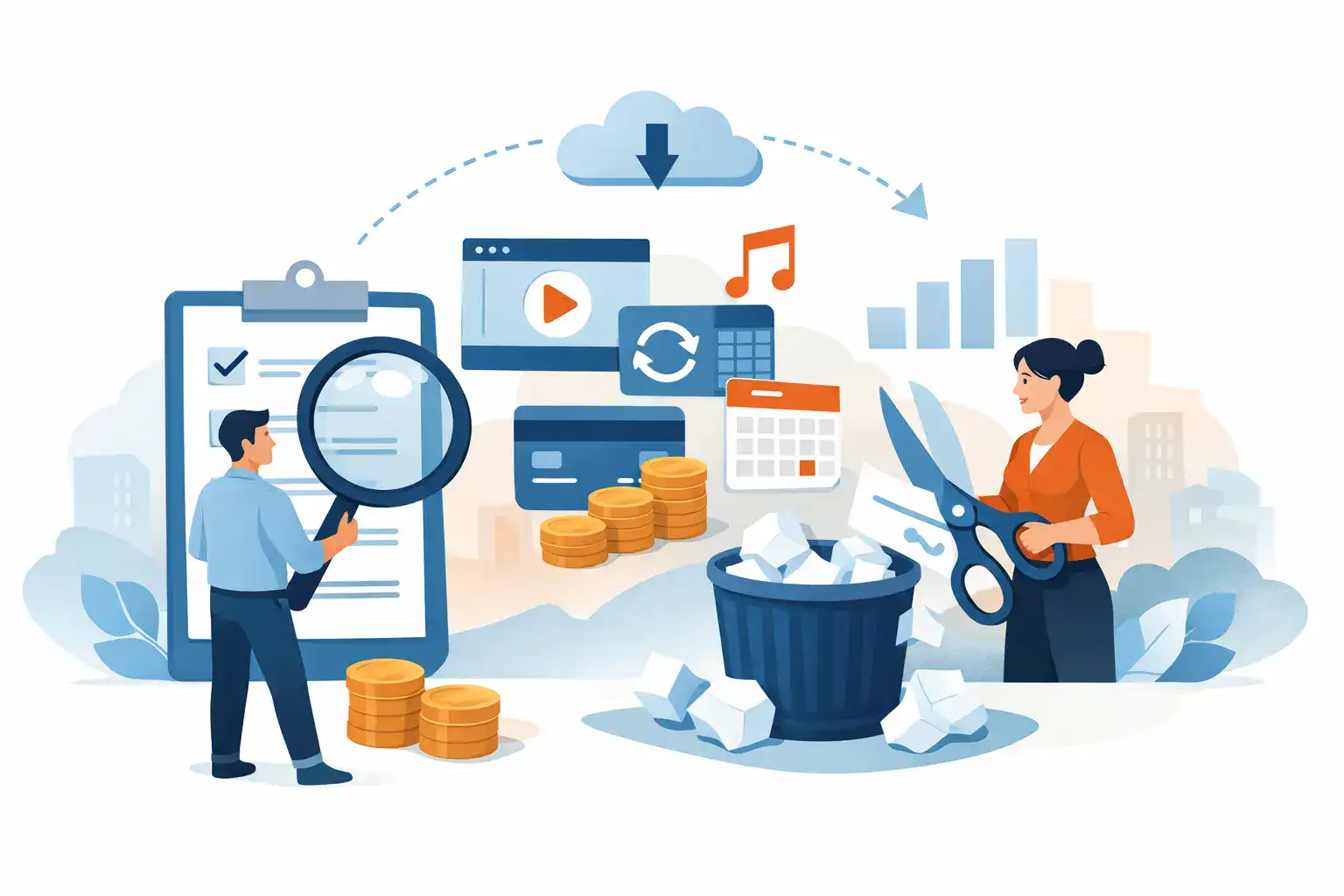
How to Audit Business Subscriptions and Cut Waste
A $12 app here, a $29 booking add-on there, then a yearly renewal you forgot existed. That is how small businesses end up paying hundreds or even thousands of dollars for tools nobody is actively using. Learning how to audit business subscriptions is not glamorous, but it is one of the fastest ways to find money without selling more, raising prices, or cutting the things customers actually value.
For a sole trader or lean team, subscriptions can feel harmless because each charge is small. The problem is not one tool. It is overlap, forgotten trials, duplicate logins, and software bought for a problem that no longer exists. A good audit gives you reassurance, not hype: you can keep the tools that genuinely save time and remove the rest.
Start With the Charges, Not Your Memory
Do not begin by asking, “What software do we use?” You will miss things. Start with the evidence: your business bank account, business credit card, PayPal account, Apple or Google purchase history, and any payment platform used for online tools.
Review at least the last 12 months. Monthly subscriptions are easy to spot, but annual renewals are where expensive surprises hide. Export transactions to a spreadsheet and search for recurring merchants, software names, “subscription,” “membership,” and common payment processors.
Create one row for every recurring charge. Include subscriptions that are paid monthly, annually, quarterly, or per user. Also include tools that look like one-off charges but renew automatically after a free trial.
For each item, record these details:
- Tool or service name and what it is supposed to do
- Monthly or annual cost, including sales tax and extra user fees
- Payment method, renewal date, and the person who owns the login
- Number of active users and how often the tool was used in the last 90 days
- Whether another tool already performs the same job
This takes a little time the first time around. It is still far quicker than repeatedly wondering why cash feels tight at the end of the month.
How to Audit Business Subscriptions for Real Value
Once you have the list, do not cancel everything that has not been used this week. Some subscriptions earn their place because they reduce risk, protect customer data, or save major effort during busy periods. The goal is to judge value, not simply chase the lowest number.
Ask four blunt questions about each subscription.
First, is it being used? Check actual activity where possible. A team may say they need a design platform, email marketing system, or AI writing tool, but the account data may show nobody has logged in for months.
Second, does it produce a clear outcome? “We might need it” is not an outcome. “It sends appointment reminders and prevents no-shows” is. A tool that saves two hours of admin a month may be worth $20. A $50 tool that creates no measurable time saving, revenue, customer benefit, or compliance protection is a candidate for removal.
Third, is there duplication? Small businesses commonly pay separately for video calls, file storage, forms, scheduling, email marketing, task management, and customer messaging when their main platform already includes some of those functions. You do not need one tool to do everything. You do need to know when you are paying twice for the same outcome.
Fourth, what is the cost of stopping it? Canceling an unused stock-photo library is low risk. Canceling your password manager without a replacement is not. Mark each subscription as keep, downgrade, consolidate, cancel, or investigate before making changes.
Calculate the Cost Per Useful Use
A simple calculation cuts through vague opinions. Divide the monthly cost by the number of meaningful uses in a typical month.
If a $30 scheduling tool books 60 appointments monthly and prevents back-and-forth messages, it costs 50 cents per booking. That may be excellent value. If a $30 social media tool was opened twice last month to schedule posts that could have been created elsewhere, the value is less convincing.
Be fair about tools that support work behind the scenes. Accounting software may not be opened daily, but it can make tax time less stressful and reduce costly mistakes. The point is to make a conscious decision, not pretend every subscription must justify itself through daily logins.
Look for the Most Common Money Leaks
Certain subscription patterns deserve extra scrutiny because they build up quietly.
Free trials are a classic example. Someone signs up to test a tool, uses it once, then the card stays on file. Search your inbox for words such as “trial ending,” “receipt,” “renewal,” and “payment successful” to uncover them.
Unused seats are another leak. You may be paying for five users in a platform when only two people need access, or for premium seats when basic permissions would work. Check your billing page rather than assuming your plan matches your current team.
Annual plans need a different approach. They can offer genuine savings if the tool is core to your operation. But paying annually for a tool you may replace in three months turns a small mistake into a sunk cost. If you are uncertain, monthly billing can be the smarter choice until the workflow proves itself.
Finally, watch for feature creep. A booking system adds marketing tools. Your email platform adds landing pages. Your accounting app offers payroll. Sometimes the all-in-one route lowers costs. Other times, the add-on is weaker than the specialist tool you already use. Compare the feature you actually need, not the longest feature list.
Use AI to Speed Up the Review, Not Make the Decision
You do not need to manually read hundreds of bank lines. Export your transactions, remove sensitive customer details, and use ChatGPT to help classify possible recurring payments, group similar vendors, and flag charges that appear monthly or annually.
For example, you can paste a cleaned list of transactions and ask:
> Identify likely recurring software or service subscriptions in this list. Group them by vendor, estimate annual cost, flag duplicate categories, and create a review table. Do not invent missing information.
Keep the final decision human. AI can organize a messy list quickly, but it cannot know that your rarely used form tool is essential for a seasonal event, or that a client portal is required by a contract. Treat it as an admin assistant, not your finance director.
Be careful with data privacy. Do not upload unredacted bank statements, customer names, account numbers, or sensitive business information into a general AI chat. Use a simplified transaction export with unnecessary details removed.
Make Canceling Safe and Deliberate
Before you cancel, check the renewal date, data-export options, and contract terms. Download files, contacts, reports, templates, or invoices you may need later. If a tool connects to your website, payments, bookings, or email, confirm what will break when access ends.
For tools you are unsure about, set a short decision window. Downgrade to a free plan, pause the account, or cancel with a reminder set 21 days before the final deletion date. This gives you room to discover whether the tool is genuinely missed without paying indefinitely out of caution.
Put one person in charge of each remaining subscription, even if that person is you. Every account should have a known owner, login recovery details, and a business email address rather than a former employee’s personal inbox.
Build a 20-Minute Monthly Subscription Check
A subscription audit is not a once-and-done cleanup. New tools creep in when business gets busy, which is exactly when owners are least likely to notice them. A short monthly check prevents the mess from returning.
On the same day each month, review new recurring charges, upcoming renewals, inactive users, and any tool that has changed price. Keep your subscription tracker in the same place you review cash flow or expenses. Then schedule a deeper quarterly review to revisit overlaps and annual plans.
Set one ground rule for future purchases: nobody starts a paid trial or subscription without adding it to the tracker on the same day. That tiny habit stops “temporary” tools from becoming permanent expenses without lifting a finger.
The best subscription stack is not the one with the most impressive logos. It is the small set of tools your business actually uses to serve customers, protect the operation, and get time back. Every dollar you stop wasting can go toward better service, a calmer cash buffer, or a tool that truly earns its place.